
The Hidden $700 Bill in Your Shopping Cart
And what to do about it.
Finistack
5/23/20265 min read
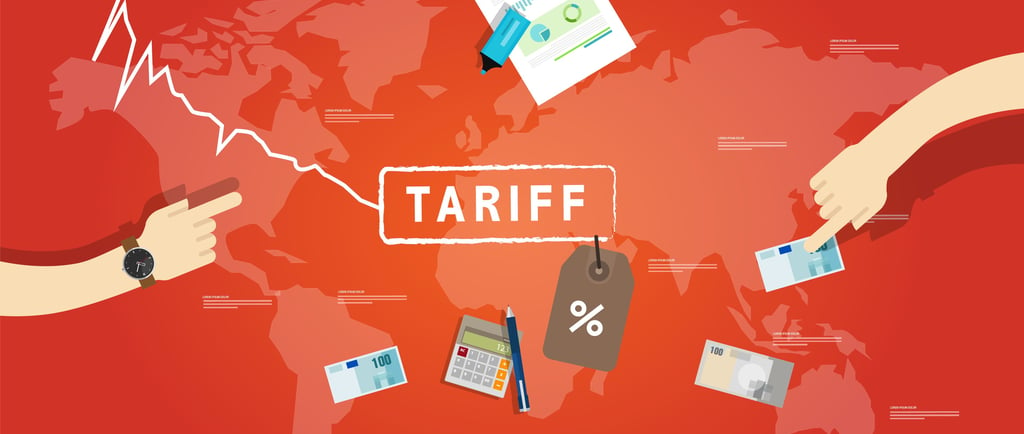
If your grocery receipt has been giving you side-eye lately, you’re not imagining things — and it’s not just gas prices. Inflation climbed back to 3.8% in April, the highest reading since May 2023, and there’s a specific reason why: tariffs are now fully landing on your wallet. Here’s what’s happening and what you can actually do about it this week.
Wait, Didn’t Inflation Come Down?
It did — for a while. Inflation peaked at 9.1% in June 2022, then gradually came down as the Fed raised interest rates aggressively. By early 2026, it looked like we were almost at the Fed’s 2% target. Then trade policy changed things.
In April 2026, the Consumer Price Index (CPI — the government’s main measure of how much everyday goods and services cost) rose 3.8% compared to a year ago. Energy prices jumped a staggering 17.9% year-over-year, accounting for more than 40% of the overall gain. Food prices rose 3.2%. It’s a noticeable step backward.
So What Do Tariffs Have to Do With It?
Tariffs — taxes placed on imported goods when they enter the U.S. — sound abstract until you realize they end up at the bottom of your receipt. And now we have research that connects the dots directly.
A study published this month by researchers at the Federal Reserve Bank of Dallas found what they called a “full pass-through” of tariff costs to consumers. Translation: companies are no longer absorbing tariff costs. They’ve passed every cent to shoppers.
One finding stood out: Federal Reserve research found that if retailers’ acquisition costs rise by $1 because of tariffs, they charge $1 more for that good — about seven months later. That seven-month lag is key, because it means we’re still feeling the full impact of tariffs that took effect last year.
Core inflation — which strips out volatile food and energy prices — hit 3.2% in March 2026, the highest since 2023. The Dallas Fed researchers estimated that without tariffs, core inflation would have been 0.80 percentage points lower, sitting at a much more manageable 2.3%.
In dollar terms, the average U.S. household is looking at roughly $700 in additional costs in 2026 due to tariffs, according to Tax Foundation estimates. That’s spread across clothing, electronics, household goods, and food imports.
Where the Pain Is Hitting Hardest
Not all prices are rising equally. Here’s what’s seeing the biggest jumps right now:
· Gas and energy: Up nearly 18% over the past year — this one drives a lot of the headline number. If you commute or live in a cold climate, it’s hard to avoid.
· Clothing and apparel: Up roughly 8% due to tariffs on imported textiles. The next time you’re shopping for basics, you’ll likely notice the difference.
· Electronics: Expected to rise around 18% in the short run. Laptops, phones, appliances — anything with components made abroad is in this bucket.
· Food: Up 3.2% overall. Imported produce, coffee, and processed foods that rely on foreign ingredients are all taking hits.
The Fed Is Holding Steady — But Relief Isn’t Coming Fast
The Federal Reserve just held interest rates steady at 3.5%–3.75% for the third meeting in a row. (Interest rates affect how expensive it is to borrow money — for mortgages, car loans, and credit cards.) The Fed is essentially waiting to see whether tariff-driven inflation proves temporary before deciding to cut rates.
New Fed Chair Kevin Warsh, who took over on May 15, is navigating a tricky situation: rates feel high to most borrowers, but cutting them while inflation is running at 3.8% risks making things worse. The most likely path from here is a long “wait and see” stretch, which means high borrowing costs aren’t going anywhere fast.
If you have variable-rate debt — especially credit cards, where the average APR is around 21% — this matters for you right now.
Your Savings Can Actually Beat Inflation Right Now
Here’s some genuinely good news: high-yield savings accounts (HYSAs) at online banks are currently paying between 4.5% and 5.0% APY (annual percentage yield — what you earn on savings over a year). That’s meaningfully above the 3.8% inflation rate, which means your money in one of these accounts is actually maintaining and growing its purchasing power.
That’s not true of a standard big-bank savings account, which still pays well under 1% at most institutions. If your cash is sitting there, it’s quietly losing ground to inflation every single month.
What You Can Do This Week
1. Check where your savings are sitting. If you have cash in a big-bank savings account earning 0.01%–0.5%, move it to a high-yield savings account at an online bank. You can open one in 10–15 minutes, and the difference in earnings over a year is meaningful.
2. Do a quick tariff audit before your next big purchase. If you’re about to buy electronics, clothing, or appliances, buying sooner rather than later may save you money as prices continue to rise. Price-tracking tools like CamelCamelCamel (for Amazon) let you see recent price history before you buy.
3. Look at your variable-rate debt. If you’re carrying a balance on a credit card, that debt is expensive right now. Even paying an extra $50–$100 per month toward the principal can save hundreds in interest over the year.
4. Trim one tariff-sensitive category. Energy and clothing are two areas where you have the most flexibility. Shopping secondhand for basics or adjusting your thermostat a few degrees can offset a real chunk of that $700 tariff hit.
5. Mark your calendar for June 10. That’s when the Bureau of Labor Statistics releases May 2026 CPI data. If inflation ticks higher, it pushes back any Fed rate cuts further. If it dips, the Fed has more room to act. Either way, it’s worth knowing.
The economy is sending some mixed signals right now, but your personal finances don’t have to be — small moves this week add up more than you’d think.
Sources
Consumer Prices Rose 3.8% Annually in April, Highest Since May 2023 — CNBC, May 12, 2026
https://www.cnbc.com/2026/05/12/cpi-inflation-april-2026-.html
Fed Researchers See ‘Full Pass-Through’ of Trump’s Tariff Costs to Consumers — Fortune / Tristan Bove, May 11, 2026
https://fortune.com/2026/05/11/trumptariff-cost-full-pass-through-on-consumers/
Effects of Realized Tariff Changes on PCE Prices Peaked in First Quarter 2026 — Federal Reserve Bank of Dallas, May 2026
https://www.dallasfed.org/research/economics/2026/0505-mau
Consumer Price Index Summary — April 2026 Results — U.S. Bureau of Labor Statistics
https://www.bls.gov/news.release/cpi.nr0.htm
Trump Tariff Tracker 2026: Trade War by the Numbers — Tax Foundation
https://taxfoundation.org/research/all/federal/trump-tariffs-trade-war/
The Fed Subtly Signaled That Only Rate Cuts Are on the Table — CNN Business, May 1, 2026
https://www.cnn.com/2026/05/01/business/fed-reserve-rate-hikes
Disclaimer: This blog may include AI-generated content derived from web crawling, and it features quotes from original-cited inline or public sources. The information presented is for general informational purposes only and may not reflect the most current data or information available. While we strive for accuracy, we encourage readers to verify the information from original sources or reach out to a certified financial adviser for important financial decisions.
Follow Finistack on social media
Have abundant mindset, add value to this beautiful world, and enjoy your life the way you envision.
We move fast, so things aren’t always perfect. Help us level up — Share your feedback.
© 2026 Finistack LLC. All rights reserved.